Homily on the Occasion of the 36th Anniversary of Death

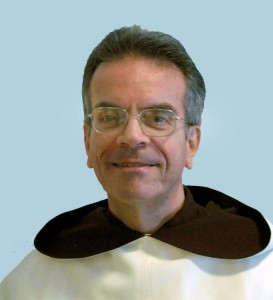
Very Rev. Mario Esposito, O.Carm.

+

Maria

Mother Mark and members of the General Council, Reverend Fathers, members of the McCrory Family, friends of the Carmelite Sisters, and all of my dear Sisters and Brothers in Carmel.

Once again we find ourselves together to mark the anniversary of the Birth and Death of Venerable Mary Angeline Teresa McCrory, foundress of the Carmelite Sisters for the Aged and Infirm, and an apostle, in a sense, for the care of the elderly and infirm in the Church. Three dozen years ago in 1984, all were saddened at her death – a peaceful death, yes – but none the less the passing of such a beloved and important person in the life of so many. Now, however, we see more clearly that Mother Angeline lives on and she is not the only one who was a model of fidelity. We too, today, and in every house of the Congregation are being faithful to her memory, to renewing again a sense of her spirit, to asking anew what she can teach us, and to express in a real Catholic way our sense of solidarity with the Church on earth and in heaven in the communion of the saints. Though Mother Angeline has returned to the house of the Father, her daughters and her charism live on, always growing despite many challenges, as even now we welcome the D’Youville Life & Wellness Community into our Carmelite family and System. Living and growing, though, are not the products of luck or chance. Living and growing are possible because the roots are deep and the ground is solid, and the house is built with the right materials and supports.

This is not the first time we have explored Mother Angeline’s virtue of fidelity on her anniversary. We return to a form of this theme this year to try and learn even more about what it means when we say that she modeled this virtue. I would say that she lived the virtue of fidelity in her total consecration to God and vocation, and in the fact that all of her life was ordered toward a loving union with God, and compassionate service to her Sisters and to her beloved old people. Prayer, devotion, community spirit, innumerable acts of kindness, all of these strengthened and demonstrated Mother’s fidelity which was unshakeable. The words of Sirach the wise one, which we heard this morning are so instructive. Four times he praises the one who fears the Lord, not the one who is afraid of God, but the one who possess that gift of the Holy Spirit, fear of the Lord. What is this? It is a deep respect for God, an acknowledgement of who God is, and that he alone is absolutely worthy of our love, our obedience and of our service. This fear of the Lord breeds hope and the fact that those who hope in God are never, in the end, disappointed. This fear of the Lord brings down the blessings of God on the believer, it births trust in God’s forgiveness, in God’s mercy, in God’s protection and compassion. Fidelity to God means fidelity to the Faithful One Himself, a relationship which brings untold gifts. Mary, the Faithful Daughter of Zion and Daughter of God, mirrors the struggle and victory of true faithfulness. Mother’s Angeline’s life and struggles and victories show us the same.

Can this fidelity help us today? You already know that the answer is yes. So many forces, so many crises, so many questions and struggles face us as individuals, as a Church, as religious and in our culture. Parents struggle to know how to ground their children in the best things, in a world of counterfeit. Those who serve in leadership and health care, in education and charity know the complexity of the issues, and how hard it is to say in the face of the culture of death and bottom line of money, “no, there is another value at work here”. When we pray for and strive for fidelity – that is – being true to who we are, and true to God, and true to our deepest calling, then we are already armed to face life. We have to seek, with St. Paul, all that is true, all that is honorable, all that is just, all that is pure, all that is lovely, all that is gracious and excellent and worthy of praise. Mother Angeline’s fidelity was radiant with trust. In what did she place her trust? First of all, in God. Without question, and nurtured by contemplation and devotion, she drew her strength from God, and returned that in the total attitude of trust, of confidence, as taught by one of her favorites, Saint Therese of the Child Jesus. But, Venerable Mary Angeline Teresa trusted other people as well, and her trust brought out the best in others. She trusted in her Sisters, in their dedication, in their love, in their talents and energy. She trusted in the liturgy and sacraments, particularly the Eucharist, and she trusted in bishops and priests and the Church without ever losing her down home sense that people were human, and therefore she was not crushed by displays of weakness or infidelity.

Fidelity also teaches us the need to be good architects and good general contractors. The marvelous teaching of Jesus as recorded in St. Matthew’s gospel that we heard this morning, helps us to deepen our reflection on fidelity by highlighting three aspects of fidelity: that to be faithful is not a matter of words, but deeds, for deeds show the heart. Second, fidelity is ultimately about doing the will of God, “not my will, but Your will be done” said our Blessed Lord, and “be it done unto me according to Your word” said our Blessed Mother. Fidelity to God’s will and God’s commands, bring us to a wholeness of purpose and peace. Finally, like good architects and general contractors, we must build on rock, on a solid foundation, on Jesus Christ, his gospel and Him alone, and then the house of who we are as individuals and Church, can withstand any rain or flood or buffeting. Mother Angeline was a woman of deeds and a builder. She was concrete in her charity and love, never afraid to show her heart and dedication. In every act, she sought the will and glory of God and service to others. She counseled her Sisters wisely, and encouraged them always to remain faithfully faithful in order to fulfill their vocations in joy. No matter what comes our way in the world of 2020, not matter what the T.V. or media is screaming about, we can and must stay faithful to who we are, and who God calls us to be. Mother Angeline models this for us, and, I’m sure, prays for us from the heavenly halls.

Very Reverend Mario Esposito, O.Carm.

Avila-On-The-Hudson

January 21, 2020
ALL SOULS DAY

Note: The following homily was given to the Carmelite Sisters for the Aged and Infirm at St. Teresa’s Motherhouse in Germantown, NY during All Souls Day Mass as delegates gathered to begin preparations for the 2020 Congregational Chapter.

+ Maria

My dear Sisters in Christ and Our Lady of Mount Carmel –

From really old traditions in the Church, changed and adapted from different cultures and customs, the Annual Commemoration of All the Faithful Departed comes down to us as All Souls Day. This is a day for prayer and remembrance, for memories and hopes and faith, and for intercessions and suffrages offered on behalf of our deceased relatives and friends, brothers and sisters in Carmel, and those whom we have known and or served. In your work with the Aged and Infirm, and as every priest might say, we have a daily familiarity with death especially in our ministry, and as we mature, we come to know death more and more in our family and community. Death is part of living, really. Death is part of the great Christian mystery to which we have pledged our lives in the following of Jesus Christ. Always, we proclaim the death and resurrection of Christ until He comes again in glory. The Church makes it very clear to us that there should be a crucifix near the altar lest we ever forget the truth, “For Christ, while we were still helpless, died at the appointed time for the ungodly.” And …”But God proves his love for us in that while we were still sinners, Christ died for us.” In His blood is our salvation. And so near the altar even if the image is of the Risen Christ, it must always show the five wounds on His body. God never forgets the cost of our salvation, but we can forget.

As a child, I used to think of this as a dark day, a sad day as we went to Church and the cemetery. I no longer think of All Souls Day in this fashion because even though my mind, maybe our minds and hearts can be filled with memories of this or that person, another part of us is filled with hope and peace. The Good Shepherd has and is continuing to care for his own, the sheep of the flock. Jesus declared that he had come not to do his own will, but the will of Him who sent him and, it is the will of Him who sent Our Lord, that none should be lost but all should be raised on the last day. This is incredibly good news: the announcement of the power of life, and eternal life, over death. This is the source of our hope which, as St. Paul says, does not disappoint. And, all of this comes about because of the incredible love that God has for each of us, each of His children. This brings peace. Yes, we are sorry about the death of those whom we have known and loved. It is only natural and Jesus himself wept at the death of his friend Lazarus. But we don’t grieve like the pagans who have no hope. We grieve with faith and hope.

It is important, the Church also reminds us, to pray for the dead. Many of the funerals we attend today have become “celebrations of life” or announcements that this or that person is already a saint in heaven. All Souls Day reminds that this is not the way to look at Christian passing. Our funeral rites and prayers are about hope, and victory – yes. They are about resurrection and completion – yes. But they are also realistic. None of us dies in perfection. All of us need the prayers and offerings of our brothers and sisters to walk us through until the gates of heaven are opened to us. You all have Mass offered for those who died – yes, because the power of the Eucharist helps to cleanse and prepare us for the beatific vision. Today is First Saturday, and there is a long tradition regarding Our Lady of Mount Carmel and the scapular coming to the aid of the poor souls. In your homes, you are so diligent to pray with the dying and invest them in the scapular, and to accompany their passage through death to eternal life with prayer. Our Catholic funeral customs and theology show our reverence for God, reverence for death, and deep faith in the promise of eternal life given us by Christ. Our biblically based theology teaches us that we are always sinners in need of repentance and forgiveness and even in death with the aid of the prayers of the faithful, and the mercy of God, purification and wholeness can come. These days, I am sad not so much for believers, but for those who have no faith, who live only for today, who do not consider the eternal weight of life, and what the true reality of existence is. For them too, we must pray.

May eternal rest come upon all those whom we lift up in prayer today. We pray for the souls in purgatory, and for those who have no one to pray for them as we are one with them in the body of the Church. We have come to know and believe in the love that God has for us, and for our beloved dead…and so, we pray with great confidence and peace today.

Father Mario Esposito, O.Carm.

Avila-On-The-Hudson

Homily: Model of Prayer for Our Time

+Maria

Reverend Fathers, Members of the McCrory Family and guests, Mother Mark Louis Anne and members of the General Council, and all of my dear Sisters and Brothers in Carmel –

Here we are again in beautiful, “spring-like weather”, keeping the anniversary of the birth and death of Venerable Mary Angeline Teresa McCrory, the beloved foundress of the Carmelite Sisters for the Aged and Infirm. Thank you to all who braved the weather to be here this morning, and to all those who are here in spirit, but could not make it in bodily form. This 35th annual Mass is a fitting tribute to a wonderful and saintly woman, who deserves the veneration she receives. There is, really, no end to what we can say about Mother Angeline, because as we continually get to know her, she is always ready to teach us something new. A woman of her time, she was, who has continued to be a woman of our time as well. It is our fondest hope that through such avenues as the EWTN production we are engaged in at the moment, Mother can become still better known, loved, appreciated and venerated. And, we wouldn’t mind one tiny, little verifiable miracle, would we?

One time Father John Horan who many of you know, told a story about celebrating a funeral Mass in Trinidad with a full Church and a lot of emotion. A little girl who obviously was anxious and maybe confused, kept talking to her mother quite audibly, and the mother finally decided the best thing to do was to leave. However, the girl did not go quietly and everyone in the Church could hear her asking her mother, “What are we doing here? What are we doing here?” Now, this is a good question for us today, and for other days when we are together for the Mass. What are we doing here? As believers, we know that the Holy Mass is our greatest act of worship; it is of great praise to God, that it is the most perfect act of thanksgiving to God, and unites us through the sacrifice of Jesus, to the Father, to the Church and to all of creation by the action of the Holy Spirit. The Mass, though it takes place in time and space, lifts us out of time and space up to heaven to the eternal, and brings down upon us all grace, healing and life. Mass can become a routine unless we keep that lively sense of what we are doing here, and how great it is.

Today, we are keeping an anniversary and remembering Mother Angeline. She is worth remembrance, for she – along with her companions – did great things. She was certainly the inspiration, the leader, the soul of the group, the nucleus of a new religious family. She was bold, without being brash, had a vision without being a visionary, courageous while still being meek, and full of confident faith while still remaining humble. She was joyful, grateful, and optimistic, had a sense of humor, worked hard, was a sister to her Sisters, an Aunt to her family, a child of the Church yet a valiant coworker with Bishops and priests in the vineyard. Why are we here today? To remember her, yes. To thank God for the gift of who she was, yes. To try and learn something from her, yes. In addition, to ask her help and prayers for ourselves and all of her Sisters and their ministry.

I think we can learn again that she was a woman of prayer for our time. Here is the heart of who she was. When I am asked about who I think Venerable Mary Angeline Teresa is and what is the secret of her holiness, I answer: she was 100%. She was always 100% the same – same dedication, same drive, same goals, same love, no change, no variation. By this I don’t mean she was unbending or unable to adjust and change, but her core – firmly rooted in faith and prayer, never wavered. She was 100 % for God, 100 % for her Sisters, 100 % for the Church and for the old people. No duplicity, no compromise, always acting from the center which was united with the Lord in prayer and love. For me, this is her holiness, something to ponder and appreciate the heroic virtue of being steadfast.

How can we tell if a person is prayerful? Not by following them around with a clipboard and checklist to see if they put in their time praying, or, having a Smartwatch that can measure prayer time like steps for exercise. I think we can sense the prayerfulness of a person by their actions and attitudes. For example, the Book of Wisdom announces today, “I prayed and prudence was given me; I pleaded, and the spirit of wisdom came to me.” Prudence is the moderator of all virtues, a cardinal virtue, and wisdom is a characteristic that takes us beyond the knowledge of facts, to the meaning of facts, of life, of people, and of God’s ways. In the instruction of the Cause, among the heroic virtues Mother practiced prudence was clearly demonstrated in her dealings with people, with her Sisters and with difficulties. She manifested wisdom in her choices, her plans, her method of administration and her dealings with men and women.

Mother Angeline spent hours in prayer – a fact that no one can deny. When she chose a religious family to affiliate her new work with, she chose Carmel, whose very charism is of prayer. And her own prayer life contained all the elements of a well-rounded prayer experience: a deep love and devotion for the Eucharist and the Liturgy; a practice of spiritual reading and devotion to the Sacred Scripture – often saying that the reading she loved best was of the gospels – devotional prayer to Mary and the Saints and, finally, and most noteworthy, a love for silent prayer, contemplation and reflection before the Blessed Sacrament, heart speaking to heart. Here is the soul of her character.

This life of prayer led her to the practice of the Christian virtues, such as we hear St. Paul enumerate in today’s second reading: compassion, a hallmark of the ministry of the Carmelite Sisters, kindness, patience, forbearance and  forgiveness, and above all love, charity, an open heart, and gentle spirit. This led Mother Angeline to value worship so much and to pass that love on to her Sisters reminding them constantly to keep the balance between their lives of prayer and service, never neglecting time with the Lord because there we all find the nourishment and strength to serve in Christ’s name.

There is no doubt that at the end of the ages, when the sheep are separated from the goats, Mother Angeline and all those who follow her example of care and service for the least of the Lord’s brothers and sisters will be numbered among the righteous ones in eternity. We need her kind of inner life today. There are new questions, new crises, new challenges, new horizons that must be faced in society, in the Church, in health care and in the religious life. “What are we doing here?” We are remembering a woman that from her own inner core and dedication to God and doing His will, could face down the opposition of her former religious congregation, the depression, and all nay- sayers, to launch a new ministry in the service of God’s elderly, a new religious family and, in a sense, a new active way of living the Carmelite contemplative charism in our world. She did this by being a woman of prayer, of faith, a religious who lived in community and built a community where the spiritual life could flourish, and each Sister find her own personal vocation in peace and joy. She is a model of prayer, and the completeness of her dedication even until death can remind each of us that, as Blessed Titus Brandsma, a Carmelite contemporary of Mother Angeline once wrote, “For the Carmelite, prayer is not an oasis in life, it IS life.”

Venerable Mary Angeline Teresa, pray for us.

Very Reverend Mario Esposito, O.Carm. /Vice Postulator

St. Teresa’s Motherhouse, Avila-On-The Hudson

January 21, 2019